The world has been hijacked by fitness technology, which has changed the way we exercise, monitor our advancements, and stay healthy. Once it was only possible to track personal steps and heart rate with the help of a basic pedometer and heart rate watch, now it has developed into an entire ecosystem of wearables, applications, and AI-based applications that provide customized information, inspiration, and effectiveness.
The future of fitness technology is expanding at a rate never seen before in 2025. Virtual reality workouts, AI personal trainers, as well as other innovations are not mere trends, but they are the future of fitness. No matter if you are a gym-lover or a beginner in the field of wellness, these innovations can guide you towards more successful goals with the help of the latest information.
Now we will explore the most innovative trends in the field of fitness technology that are transforming how we think about health and wellness in the current days.
1. The application of Artificial Intelligence (AI) to Fitness
The use of Artificial Intelligence has transformed the fitness sector into a game-changer as it provides hyper-personalized experiences to address personal needs and ambitions. Artificial intelligence applications and gadgets measure your fitness, follow your progress and adjust your exercises on the fly.
Consider the example of Freeletics, an AI based application that will design personal workouts based on your fitness level, objectives and even exercise equipment that is available to you. Equally, Tempo Move is a smart home gym system, which is based on artificial intelligence and motion sensors to examine your position and give responses as you exercise in the gym.
The other uses of AI include virtual personal trainers, which eliminate the human coach. Such trainers give corrections and motivational signals in real time, which makes the workout an effective and safe one. Accuracy and flexibility of AI technology are assisting users to make the most out of their results without necessarily paying a huge amount of money in gym subscriptions and personal trainers.
2. Virtual Reality (VR) Fitness: Fitness in a New Dimension
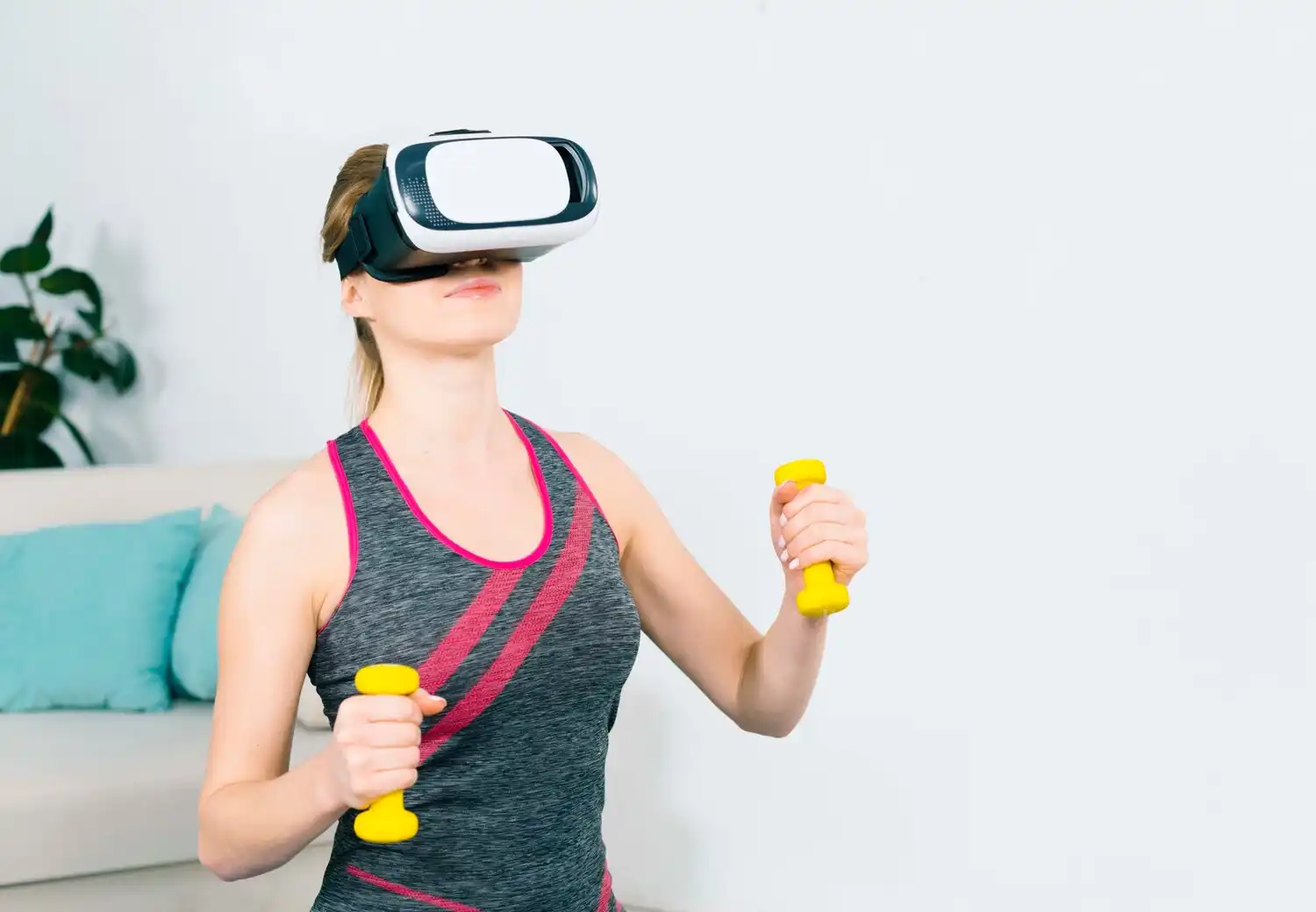
VR does not only exist in the realm of the gaming world, but it is one of the leading lights in the fitness industry. VR exercise programs such as Supernatural and FitXR place users in awe-inspiring settings where they can box, dance or do yoga and virtually tour exotic scenery.
VR workouts are so effective due to the immersive nature of the workouts. Working out in a virtual environment is usually not as uncomfortable as it may not seem a chore but a sort of adventure, and this can assist individuals to remain regular in their gym exercises.
Indicatively, a research study published in Frontiers in Psychology discovered that VR-based exercises not only enhanced physical fitness but also mental health, decreased stress, and increased motivation. VR fitness is now becoming more accessible to more people than ever before, as inexpensive VR headsets, including Meta Quest 3, become affordable.
3. Wearable Technology:Smarter and more sophisticated
Fit technology has a long way to go before it advances to mere step counters. The current models e.g., Apple Watch Series 9, Fitbit Charge 6 and Garmin Fenix 7 are loaded with powerful features like blood oxygen readings, ECGs and even analysis of sleep stages.
No longer do these wearables merely track your activities, but they are health companions. They give you a clue of your well-being in general, and you are able to know how your body reacts to stress, physical activity, and sleep.
As an example, WHOOP, a high-end fitness tracker, not only tracks steps and calories but also hears and strain levels. It then gives actionable recovery insights of how users need to push harder and when they need to rest.
Wearables are also becoming integrated with other systems and platforms, forming a smooth fitness ecosystem. Using your smartwatch, in combination with fitness applications, intelligent gym machines, and even smart diets, will enable you to see your health and fitness process holistically.
4. Smart Home Gyms: Future of Convenient Fitness
The pandemic stimulated the use of home fitness products, and smart home gymnasiums have become one of the most important new movements in this field. The systems are a combination of state-of-the-art equipment and interactive technology to provide a gym like experience in the comfort of your own home.
Such brands as Tonal, Mirror, or Peloton have established the trends of intelligent home workouts. Tonal, as one example, is an AI-based company that relies on electromagnetic resistance to develop individualized strength-training plans. In the meantime, Mirror will present live and on-demand fitness sessions, which are delivered to a wall-mounted slick device that also happens to be a full-length mirror.
Such systems are ideal to individuals who have hectic schedules and still prefer having the flexibility of working out in the comfort of their homes and not compromising variety or quality.
5. Recovery Tech: Improving Capability and Injury Prevention
Training is important, but recovery is equally important, and now fitness technology can ensure that this aspect of the workout process is maximized. Such high-tech recovery devices as NormaTec compression boots, Hyperice massage guns, and Theragun devices are assisting athletes in lowering the levels of muscle soreness, enhancing the circulation, and recovering more quickly.
Such wearables as WHOOP and Oura Ring are recovery-centered and based on the data to evaluate the quality of sleep, heart rate variability, and recovery scores. The information will enable the users to schedule workouts according to the readiness of their body, so that they do not risk excessive training and injuries.
Other high-tech recovery options are gaining popularity such as cryotherapy chambers and infrared saunas. The tools are based on temperature extremes to reduce inflammation, improve muscle healing, and optimize recovery.
6. Gamification of Fitness: Funnifying Exercises and Making Workouts Interesting
Gamification is one of the new trends in the fitness industry that includes transforming fitness into a game. Such applications as Zombies, Run! and such platforms as Zwift turn the exercise into a game that is not as dull as it is more pleasant to play.
As an example, Zwift is a combination of cycling and running with virtual worlds where the user can compete with others in reality. Likewise, Zombies, Run! makes your daily jog an exciting escape through a zombie apocalypse and provides a fun experience and a narrative to your normal cardio.
Gamification will enable fitness to be more interactive, especially to the motivated individuals who are not easily motivated. Users can also maintain consistency in workouts by earning rewards, conquering challenges, or competing with their friends.
7. Fan Club Apps: A Lot More Than Trackers
Fitness applications nowadays have changed their simple activity trackers to holistic wellness platforms. Applications such as MyFitnessPal, Strava and Nike training club have also added such features as training plans, community-based competitions, and performance statistics.
The distinction of the current fitness applications in the market is the fact that they are combined with other technologies. As an example, MyFitnessPal can be connected to your wearable gadgets to give you an image of your total caloric intake and burn. In the meantime, Strava links sportsmen all over the world, which has created a feeling of community and healthy rivalry.
Future is an AI-powered application that takes it a step further and matches users with custom-made fitness programs by pairing them with personal trainers. These applications help to provide professional-level coaching to all people no matter where they live or how much they have.
8. Fitness Tech: Sustainability
Due to the adoption of innovation in the fitness industry, the concept of sustainability has taken center stage. Firms are currently developing environmentally friendly products and solutions with less negative environmental effects.
Indicatively, such brands as Terra Hale, the first gym in the world to be environmentally aware, utilizes energy producing fitness machines to run their establishments. On the same note, other fitness technology firms are integrating recycled materials in their products and sustainable packaging.
Sustainability is not a crash, it is a wave that is in line with the increasing need to find environmentally friendly solutions in every aspect of life including fitness.
What’s Next for Fitness Tech?
The future of fitness technology is very bright. There are creative things such as biometric clothes to track muscle activity and posture during exercise and holographic exercise trainers, which will place the coach in your living room, among others.
Moreover, the improvements in AI and machine learning will also render the fitness technology more personalized and predictive so that users can reach their goals in a more efficient manner.
The possibilities are limitless as the technological aspect of fitness keeps on advancing. Such inventions not only make fitness more accessible but also enable them to control their health in a way they have never had before.
Final Thoughts
Fitness tech ceases to be a luxury- it is a central component of present-day wellness. The emergence of AI-powered personal trainers, VR-based workouts, etc., are turning fitness into an engaging, efficient, and effective activity that all people enjoy.
With the help of keeping up to speed with the current trends and introducing them into your life, you can open up new areas of performance, inspiration, and fun in the process of working out. Get ready to welcome the future of fitness technology and learn how it can change your attitude to health and wellness now.
FAQs
1. What is the most innovative fitness technology in 2025?
The most innovative products are AI personal trainers, VR fitness devices, and smart home gyms, such as Tonal and Mirror.
2. Can VR workouts be considered effective in fitness?
Yes, VR exercises are immersive and entertaining experiences that can be used to enhance physical and psychological health.
3. What is the benefit of fitness technology when it comes to recovery?
Such gadgets as massage guns, compression boots, and recovery applications monitor the preparedness of your body and assist in maximizing the recovery process, minimize the chances of injury.