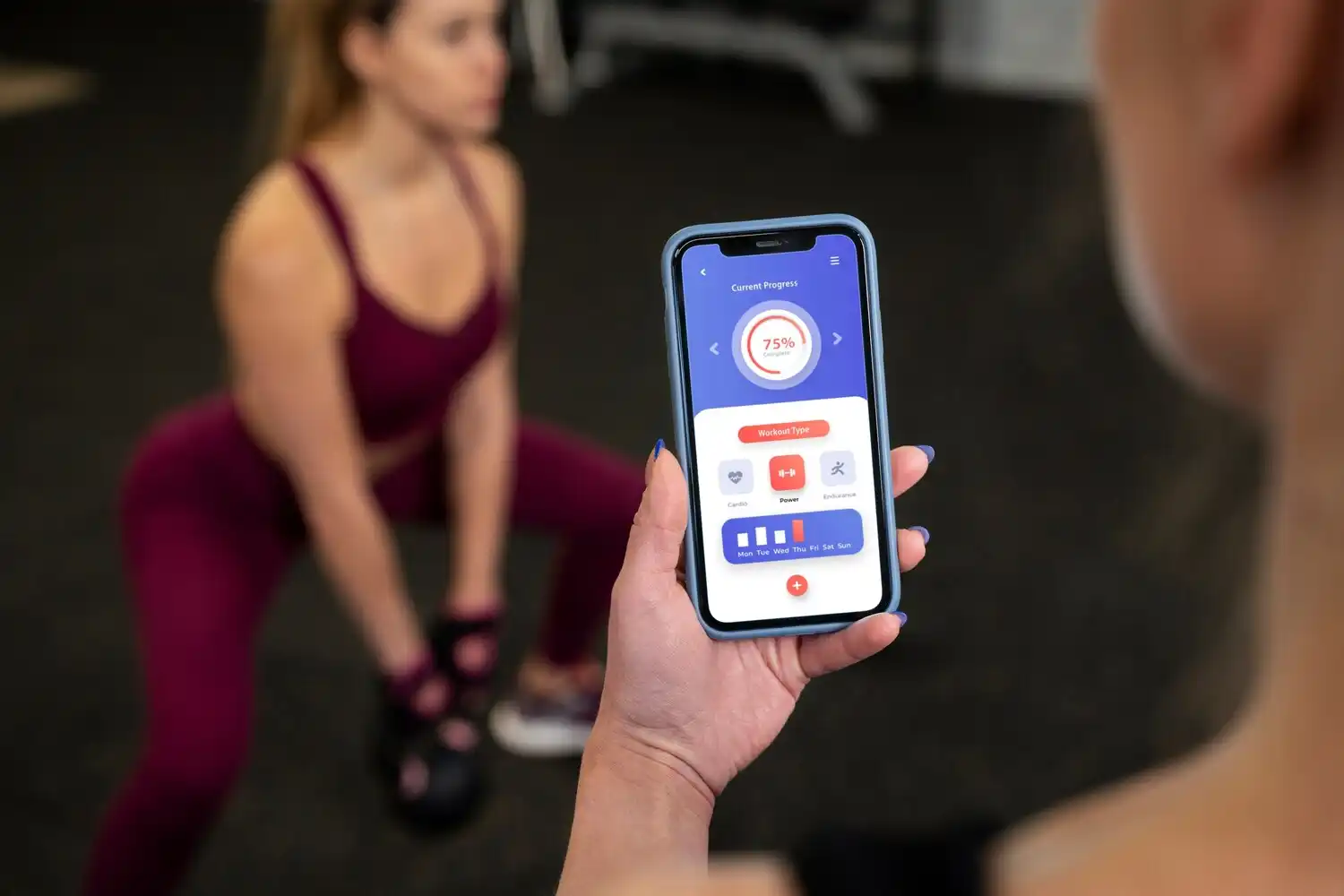
Technology is now a required instrument of meeting fitness goals despite the era of digital transformation. Those days of having to keep track of your exercises or the number of calories burned manually are long gone. Along the emergence of fitness technology, apps currently offer accurate tracking, customized feedback and even encouragement to keep you going. Be it losing weight, building muscle, or just being consistent with what you do with your workouts, the appropriate fitness technology app can be a game changer.
This blog is going to immerse into the finest apps in the field of fitness technology that are transforming the fitness experience in 2025. It is not just an app but a game changer that will enable you to be in charge of your progress in terms of fitness.
The Fitness Tech Role in the Fitness Journeys
Fitness technology is not about convenience, it is empowerment. Today, apps integrate the latest technologies of artificial intelligence, machine learning, and advanced analytics to give you a comprehensive picture of your health. These apps provide actionable information that previously could be found only in elite athletes, having the ability to track workouts to sleep patterns and more.
Here is an example of Emma, a 30-year-old marketing specialist who had a problem with consistency in terms of her fitness life. As soon as she began using the apps to monitor her physical activity and the number of calories consumed, she was not only able to lose 20 pounds but also enhance her general energy and sleep pattern. The best part? She did not have to spend hours in the gym or pay a personal trainer to assist her to do so.
Femininity with fitness technology is its adaptability to personal needs. You can be a runner, a weightlifter, or just a person who wants to be active. It does not matter, there is an app that fits exactly your needs.
1. Precision in Tracking Workouts
Among the most notable benefits of fitness technology applications, one may mention the accuracy of workouts tracking. Take Strava, for example. This application is popular among both runners and cyclists, with GPS-tracking of outdoor performances, performance analysis, and even a social component, where users share their progress and compete with the challenges, etc.
The other impressive application is JEFIT, which specializes specifically to strength training fans. JEFIT enables the user to record all sets, reps, and weights lifted by using its extensive library of exercises and highly customizable workout plans. This data over the time will give the information on the areas to improve the users can now refine their training habits.
These applications eliminate the guesses in fitness. You do not need to ask yourself how much you have run or how much you have achieved in the gym since you have hard data to base your choices on.
2. Nutrition: Keeping On Top of Things
It is just as much about what you eat as it is about how you train, when it comes to fitness. Such apps as MyFitnessPal and Cronometer allow one to easily keep track of the calories consumed, macronutrients as well as make sure that you consume enough vitamins and minerals.
The example of MyFitnessPal where the database contains more than 14 million foods can attest to the fact that people can record meals with remarkable precision. The application is also compatible with wearable devices such as Fitbit and Apple Watch, which means that the amount of calories burned will be counted correctly in relation to intake.
In the meantime, Cronometer takes it to the next level of tracking micronutrients which would suit people with special dietary requirements, e.g. vegans or people on a keto diet.
Such applications enable the users to have control over their nutrition, which is essential in achieving fitness objectives. Regardless of the intention of gaining muscle or losing weight, it is important to know your meal patterns.
3. Sleep and Recovery: The Lost Puzzle Piece
The significance of recovery in a fitness process is an underestimated value among many people. With such apps as WHOOP and Fitbit, the game is shifting towards recovery instead of training.
An example of such would be WHOOP, which offers a daily recovery score that is calculated using such metrics as heart rate variability (HRV), sleep quality, and strain. This score enables users to decide whether they want to take their workouts to the edge or take a rest.
Likewise, a FitBit does not just record how many steps you have taken and what heart rate you are at, but also how you have slept, what your sleep stages are, and how well you rested. This information will enable users to make changes in their rituals, like when they need to prioritize sleep on a day that the rest is imperative.
These apps will prevent burnout and injuries among the users by concentrating on recovery, which guarantees long-term improvement.
4. Individualization with the help of Artificial Intelligence
This is the use of artificial intelligence to develop personalized experiences, which is currently one of the most thrilling developments in the field of fitness tech. Applications such as Freeletics and Nike training club use AI to customize exercises according to your fitness, objectives and even equipment you have.
The Freeletics app is an example of an app that uses AI to create bodyweight exercises that evolve over time. Being an amateur or a skilled athlete, the app will not leave you without any challenge in every session.
On the same note Nike Training Club also has a variety of exercises, including yoga and strength training, under professional trainers. The personalization properties of the app provide users with the most out of any given session irrespective of the entry point.
Such individualization makes fitness more affordable than ever. The users will be allowed to experience the routines that are personalized to their needs and interests instead of adhering to generic workout plans.
5. Motivation and Community: Being Consistent
Being motivated is usually the most significant obstacle in any fitness program. This is met by fitness tech apps through creating a feeling of community and accountability.
Take Strava as an example. The social aspect of the application enables a user to add friends, participate in challenges, and compete in virtual races. Comradeship here is very motivational as it may be to those who like healthy competition.
Likewise, such apps as FitOn and Apple Fitness+ also provide virtual lessons during which users can perform exercises throughout the session with other people. Not only are these classes structured but they also establish a sense of belonging which can be essential towards consistency.
The Process of Selecting the Fitness Tech App
It is easy to get lost in the list of the appropriate fitness tech app due to the number of options that exist. It has to do with finding your main objectives. Do you want to have workouts, nutrition, or recovery activities? It is so much easier to find the right app once you know what you need.
For example:
-
Strava is a great option in case you are a runner or a cyclist.
-
JEFIT has unmatched features in case you are concerned with training strength.
-
MyFitnessPal or Cronometer are the best options in this case when it comes to nutrition.
The Future of Fitness Tech
The future of fitness technology is very bright as we move on. The industry is already shaking with innovations such as wearable devices that can send real-time feedback, apps that can use machine learning to anticipate performance, and even virtual reality fitness experiences.
To illustrate this, applications such as Zwift that integrate cycling with virtual worlds are changing the way we work out at home. In the meantime, due to the progress in AI, fitness applications are going to get more personalized and user-friendly than ever before, and not only that, but you will reach your goals effortlessly.
Final Thoughts
The use of fitness technology applications has altered our perceptions about health and fitness. These tools enable the user to control their fitness experiences by offering them exact tracking, custom insights, and a feeling of community. If you are an amateur or a seasoned sportsman, there is an application that can make you achieve your objectives more effectively.
Consistency is the secret of success. Having the appropriate app in your possession, it is not only easy but also pleasant to keep track of the progress. Learn more about the products of fitness, which technology has transformed your health in recent times.
FAQs
1. What is the best fitness app to use by beginners?
Such applications as Nike Training Club and MyFitnessPal are easy to use and have a well-organized structure to guide you through your first steps.
2. Do fitness apps displace personal trainers?
Although fitness apps have many useful tools, personal trainers have physical skills and personalized focus that cannot be completely duplicated by the apps.
3. Is the investment in the fitness apps worth it?
Absolutely! Most fitness applications have free versions with a wide range of features, and thus can serve as a relatively cheap option to keep track of progress and to be motivated.