

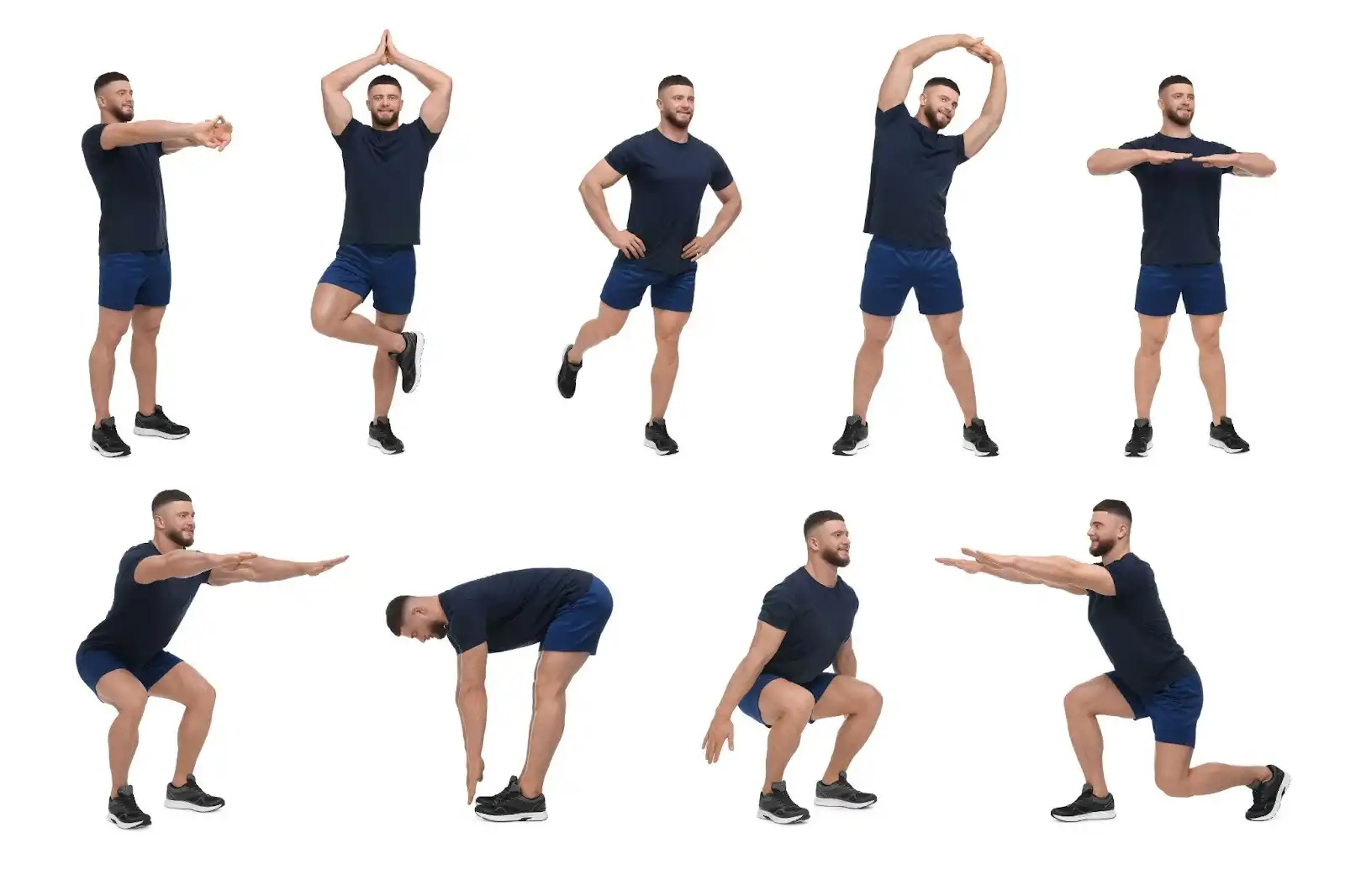
And when you have time (or equipment), you know you say to yourself, I will start working out. I have dealt with many novices who were at a loss until they discovered the easiest thing, which is that your body is your gym.
One of the most convenient methods of developing the body strength, energy loss, and mobility without using machines, without having to travel somewhere, and without owning a membership is bodyweight exercises home routines. Regularly practiced, they also develop the type of prepared physical function that simplifies everyday life: taking groceries, going up-down the stairs, or running around with your children without feeling out of breath.
Health organizations such as the World Health Organization (WHO) suggest that adults should strive to get at least 150 minutes of moderate activities every week, and muscle-strengthening work two times a week. One can be done in a brief, intelligent domestic routine, and it is in the latter category that you can get the best of both worlds by selecting those of the compound movements that will exercise several sets of muscles simultaneously.
The 10 best bodyweight exercises at home will provide you with the best non-scale payoff, as well as, form tips and easy to use beginner-friendly alternatives.
What is a great workout at home by using body weights?
The ideal no equipment exercise exercises tend to fulfill three criteria. They are secure to learn, can be trained on easily and can be trained in multiple areas at a time (think legs + core or push muscles + posture). That is how you get forward without having to have high-tech equipment.
A fast tip that you will hear most coaches and physical therapists who are certified to play say; control is better than speed. When you are capable of making the movement more gradual, and are able to maintain a superb form, your muscles labor more and your joints are also more contented.
Best 10 workouts in the gym
1) Squat
Squat is a lower body strength and daily routine mobility move.
-
The technique: Standing Hip-to-shoulder width, lean backwards with your hips, as though you are reaching toward a chair, then stand up.
-
Form cue: Proud chest and toes over knees.
-
Make it easier: to squash down to a chair or couch.
2) Push-up
Push-ups are a workout that trains chest, shoulders, triceps, as well as core- one of the most effective calisthenics movements.
-
How to do it: It consists of putting the hands under the shoulders, keeping the body straight, pushing the floor away lower, under control.
-
Form cue: Tuck the stomach to make it look like somebody is about to stab you on it.
-
Bonus Feature: Have hands raised on a good table or counter.
3) Reverse lunge
Lunges develop single-leg strength, balance, and glute activity – these do not place a strain on the knee to train.
-
How to do it: This is a lunge which is stabilized by stepping back and rising with pushing through the front foot.
-
Form cue: Think down not forward.
-
Easier said than done: Have a wall to lean on.
4) Glute bridge
When you sit a lot, then you find that your glutes tend to switch off. The use of bridges is used to reinstate their attention to the lower back.
-
What to do: Lie easily with feet flat, squeeze glutes to raise hips then wait then lower slowly.
-
Form cue: Ribs down -do not go over on your back.
-
Make it easier: One should limit the scope of movement and concentrate on the squeeze.
5) Plank
Planks are the best way of training anti-extension core strength (the type that supports your spine when you move in your everyday life).
-
Precautions To do it: have the elbows under the shoulders (or the hands under shoulders) straight, and breath evenly.
-
Form cue: Push the floor away and maintain the hips at the same level.
-
Make it easier: Retention of 1020 seconds and repeat.
6) Dead bug
It is a silent core workout that trains control- ideal among the beginners and those who are going back in core stability.
-
How it must be done: When lying on your back, with arms raised, bend your knees, straighten the opposite arm and leg, alternately.
-
Form cue: The back remains lightly in contact with the floor.
-
Find the easiest way: At the beginning move legs or arms only.
7) Mountain climber
A classic for cardio + core. It is also appropriate in home circuits of HIIT.
-
The way to do it: Starting in a plank, kick knees towards a chest in alternating motions, moving in a slow and deliberate way.
-
Form signal: elbows are to be placed right atop wrists.
-
Easy it: Slack it–quality first.
8) Bodyweight Hip hinge
Hanging at home is something that people tend to ignore, yet it is necessary to have powerful hamstrings and a strong back.
-
How to perform it: Soft knees, back the hip, lean forward with the torso, and back using the squeeze of glutes.
-
Form cue: Imagine that a door of a car was closed using the hips.
-
Make it lighter: Reduce range and practice on hips.
9) Side plank
Planks on sides An excellent tone-winner working on obliques and hip stabilizers- very effective in the workplace on avoiding wobbly motion.
-
How to perform it: Under shoulder (place elbows), feet stagger, raise hips and hold till breathing.
-
Form cue: Do not sink, take your ribs off the floor.
-
Simplify it: Lower the knee at the bottom to the ground.
10) Burpee
Burpees are conditioning builders, though they do not need to be as cruel.
-
How to do it: Squat, put hands on the floor, step backwards to the plank, step forward, stand up (and add jump at a later stage).
-
Form assistance: It is necessary to keep the spine straight and move rhythmically.
-
Easier said than done: Get rid of the push-up and jump.
An easy method of implementing such exercises
This is a realistic example of a work routine that I have seen working with busy people; a 1218 minute routine that was applied three times a week. Choose 5 exercises (squat, push-up, reverse lunge, plank, glute bridge). Repeat 2-3 rounds each 30-40 seconds then rest 20 seconds.
It is the way lots of amateurs create consistency: not by working towards exemplary workouts, but by accumulating good enough sessions until outcomes become evident.
Favoritism: beginner workout
Attempt this body weight exercise home workout:
-
Squat-Push-up (incline when necessary)-> Reverse lunge-> Glute bridge-> Plank.
Do 2–3 rounds. Rest as needed. To complete, not to get devastated.
FAQs
1) What is the frequency with which I should do body weight exercises at home?
In most cases, 3 sessions a week are perfect among beginners. It allows a chance to rest your muscles and develop habit and strength. Begin with 15-25 minutes and then proceed slowly. Light walking or mobility work is helpful on off days and helps to enhance consistency in the long run.
2) Can home body weight exercise really build muscle?
Yes, all the more so when a beginner. Growth of muscles occurs when you have a challenging movement, and with time, you develop. Make them harder (incline to full push-ups), add tempo (slow lowering) and increase sets and train them until they are near to fatigue but well-formed. The amount of protein that is taken and sleep is also important.
3) Which is the best bodyweight home workout when I am short of time?
The best kind of short full-body circuit will include squats, push-ups, lunges, plank, and glute bridges. Give oneself a time limit in 12-15 minutes and gradually move. In one session, you will be training legs, upper body, and core. Regularity is better than lengthy exercises that you do not stick to.
